

By Kira Rich
Editorial Editor
Editorial
The accessibility of social media has made it easier than ever to speak out against injustice. It allows users to share information, raise awareness, engage in political discussion and show solidarity with communities facing discrimination or oppression with just a few clicks. Issues that once struggled to receive traction can now gain attention by millions within minutes. But with activism becoming the norm amongst social media culture, an important question comes in: when does raising awareness just become performing concern?
Performative activism is when you publicly support a social or political cause, but your primary goal is to enhance your image, gain approval or appear socially conscious, rather than actually contributing to meaningful change. The concept isn’t solely on social media, but it fosters an environment where activism can become more about visibility rather than action.
The problem isn’t that people use social media to discuss important issues or current events. In fact, digital platforms have been useful for organizing protests, for the distribution of resources and for the amplification of voices that are often ignored by the traditional media. The problem is when sharing a post is the beginning and end of someone’s involvement.
Reposting the same infographic or a temporary story displaying solidarity can create the illusion of participation without any real commitment. They can show that they care, get kudos from their followers and move on to the next trending topic. Meanwhile, the communities affected by those problems continue to suffer long after the social media conversation has died down. In some cases these reposts can be proven to be ineffective or even harmful.
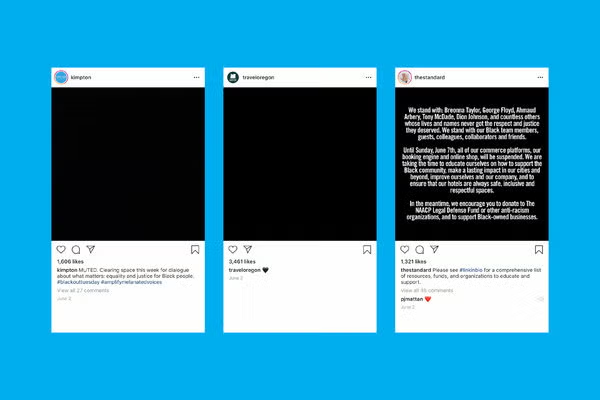
For example, in 2020, at the height of the resurgence of the Black Lives Matter movement, reposting a black square was a trend to show solidarity. Theoretically great, but practically, how does a million black squares help the oppressed people? With the amount of attention the movement was getting, this act of solidarity could have been used as an opportunity to expand on the stories of victims followed by resources to help.
More recently, people were reposting AI images of the destruction in Gaza. The inaccuracy of the images and the recycling of AI content was ultimately more harmful than helpful. Eventually someone called out the AI usage and the photo was replaced with a real image that displayed the destruction in Gaza. People began reposting to real image on social media to spread awareness about the genocide taking place.
The pattern is especially visible when public attention moves from one global conflict or humanitarian crisis to another or to domestic political issues. For days, a single cause could take over social media feeds, with users posting the same graphics and statements. Then as another topic emerges and gains more traction, the previous issue seems to fade from online discussions. Just because an issue isn’t trending doesn’t mean that the humanitarian crisis is over.
There is also a growing tendency to make activism a measure of personal morality. Social media encourages users to build public personas through the opinions they express, the causes they support and the content they share. Another way to establish social status or distinguish oneself from others can be supporting the right causes. In this world, it can even become more important to appear to have the right opinions than to understand the questions.
With this being the new standard, it can be especially nerve-wracking for people who want to fit in with their peers or retain a following. Not everyone is politically involved, meaning they may not have the same knowledge. Such pressure can blind people from effectively speaking on a situation.
This creates a further problem: activism becomes less about helping others and more about protecting one’s own reputation. Some users may share information simply because it matches their beliefs or is gaining a lot of engagement. Others may call out and publicly criticize issues online, without considering whether their actions are contributing to any meaningful solutions. Outrage becomes content, controversy becomes an opportunity for engagement.
But it would be wrong to imply that anyone who posts political or humanitarian content online is acting in bad faith. Awareness is a significant aspect of social change, and not everyone has the financial means, time or physical ability to participate in demonstrations, donate to organizations, or volunteer their time and that’s okay. For some people, sharing information may be one of the few ways to participate in public conversations.
Social media activism can also expose users to views they may have never been exposed to otherwise. It can give visibility to grassroots movements, connect people with organizations and make information more accessible. To write off all online activism as performative is to ignore the real work being done through digital communities.
But awareness should be a starting point, not a replacement for action.
Supporting a cause requires more than demonstrating public approval. It means taking the time to understand an issue beyond a viral post, researching the organizations involved, listening to the communities directly affected and remaining engaged even when public attention moves elsewhere. Depending on the cause, meaningful participation might involve volunteering, contacting elected officials, donating when financially possible or simply having difficult conversations beyond the internet.
There is also value in recognizing that activism does not always need an audience. Not every charitable contribution needs to be photographed, every demonstration needs to be documented or every act of solidarity needs to be announced publicly. Some of the most meaningful contributions to social change happen without an accompanying social media post.
Ultimately, social media is not the enemy of activism. But the ease of digital platforms should not redefine what it means to engage in social change. Sharing information may get the conversation started, but conversation alone isn’t going to fix the problems it brings to light.
But if activism’s goal is a better society, then how many people saw a repost or liked a statement cannot be the measure of how committed you are. It should be what you see when you turn the screen off.
Activism is not about the person doing the supporting; it’s about the people and causes you’re supporting.