

Historical wins make waves across the U.S. during the midterms.
By Samiyah Heyward
Staff Writer
News
In the Nov. 3, 2026 midterm elections, voters flipped seats across multiple states. They elected a historically diverse slate of candidates from various racial, ethnic, religious and cultural backgrounds for the U.S. House and Senate, many for the first time.
Winners included the first Native American senator, the first Muslim senator, the first openly gay senator and seven Black senators elected across multiple states, many of whom were also historical firsts.
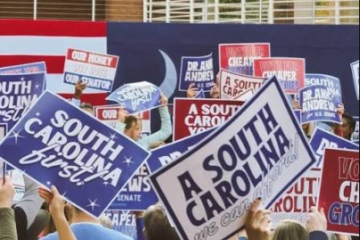
In South Carolina, voters flipped a Senate seat, ending nearly three decades of Republican dominance, electing the first woman, Annie Andrews, to serve as state senator.
While voter participation during the midterm cycles typically drops in comparison to presidential cycles, the voter turnout this election year saw an unexpected increase.
According to the Brennan Center for Justice, it was the second-highest turnout rate in a midterm year since 1914, exceeded only by the 2018 midterms.
An analysis published by National Public Radio (NPR) found that majority-Black counties across the South averaged an 86% turnout rate, which accounted for 10% of the electoral votes.
Furthermore, the Washington Post reported that Hispanic voters backed Democratic U.S. House representatives by a 65% to 31% margin, accounting for 8% of the total electoral votes. In comparison, Asian American and Pacific Islander voters backed Democratic U.S. House representatives by a 70% to 27% margin, making up 2% of the total electoral votes.
Cameron Ballew, junior political science major and vice president of the Winthrop College Democrats, further expanded on the importance of this recent midterm election.
“The diversity we saw in the 2026 midterms is notable. We haven’t seen these milestones passed in decades, centuries almost,” he said. “ It gives a lot of promise […] it gives promise to those people who feel like they are now more adequately represented […] it gives more value to the vote of minorities and the vote of [LGBTQ+] people.”
“[A lot of] people don’t really expect to see people who look like them, talk like them, or have the same gender or sexuality expressions as them to be elected […] it gives a lot of hope for the future seeing so many diverse individuals being elected, and it didn’t even take ten years or anything. All of this happened in one night,” Ballew said.
A 2025 Pew Research report states that the current 119th United States Congress is the most racially and ethnically diverse in history.
However, they still fall behind national demographics primarily because White voters account for 74% of voting participants within Congress. In comparison, White Americans make up only to 58% of the general U.S. population. This 16-point gap has remained relatively stagnant since 1981.
Additionally, the Brennan Center for Justice reports that the racial turnout gap between White and non-White voters has consistently widened since 2012.
Ngân “Nancy” Nguyễn, senior finance major, emphasized the importance of voter turnout and how the increase in participation among Asian American voters highlights how communities often viewed as politically disengaged are becoming more influential in elections.
“This is one of the proudest moments I’ve had politically when it comes to my community,” Nguyễn said. “Though the Asian American community tends to lean more towards the Democratic Party, in recent years Asian Americans have been leaning more right, especially the Vietnamese community, which I am a part of.”
The conservatism seen in Vietnamese American communities is primarily due to their aversion to communist and leftist policies due to experiences with the Vietnam War.
NPR reports that Asian American voters swung heavily towards Democratic candidates by a 43-point margin in 2026, a 21-point shift from the 2024 election cycle.
“Vietnamese Americans are statistically proven to be the Asian ethnicity with one of, if not the highest, conservative votes in the AAPI community,” Nguyễn said. “At one point, I feared that it would be this way forever, but seeing the results of the election genuinely blew my mind.”
Nguyễn highlighted that this shift represented a significant moment of political engagement and unity within the Asian American community.
“Quite a number of Asian people prefer to stay silent due to our cultures, values and the belief that we’re lucky enough to even be here […] for a group that is only 5% to 6% of the U.S. population, this showed that we are finally united in the decision that we urgently need change in this country, so we showed up and showed out. I am proud of my community and our voting turnout more than ever,” Nguyễn said.
Similar sentiments about the importance of representation and civic engagement were voiced within the Black American community.
Mylan Logan, sophomore psychology major, shared his perspective on the newly elected officials.
“I feel very represented in the people who were elected this new term, way more than I have in previous years […] especially with the first Black woman governor and the first openly gay man as a senator. These groups, which both are marginalized and are a part of me intrinsically and socially, being seen for the first time in our government […] is very liberating, to say the least,” Logan said.
Logan added, “Not only would this mean that there are members of my community reaching new high heights […] but it would also mean advocates in our law-making bodies, which helps me feel seen and reassured all the more, as I’m sure it does with others in my community.”
While racial and ethnic identity shaped many voters’ experiences in the election, age also played a notable role in how individuals viewed political participation.
Jamilatu Deme, sophomore business major, shared her experience as a younger generation voter.
“I figured there would be a higher percentage of younger voters in comparison to older ones […] a lot of us didn’t get to vote in [previous elections] so I knew that most of us who didn’t get to vote would end up voting this election cycle,” Deme said.
As communities reflect on the results of the midterm elections, a broader desire for responsiveness and consequential change from the newly elected has emerged.