
An update to how current candidates were doing and spending.
By Hudson Mize
Staff Writer
News
Billions have been spent on the November midterm elections for both parties, with the campaign financing count beginning in January of 2025 and lasting until December 2026.
The Federal Election Commission (FEC) tracks federal campaign contributions and how much candidates are spending. As of Oct. 31, $3.2 billion have been spent in total.
According to the FEC, $2.02 billion has been spent by House candidates and $1.18 billion has been spent by Senate candidates.
So far, the top ten candidates in spending are all members of the Democratic party, with the top spender James Talarico, Texas Senate candidate, spending over $136 million.
However, Republicans have spent more money on advertisement campaigns than the Democratic party.
According to statistics shown by the Washington Post, Republicans have spent around $1 billion in advertising, compared to Democrats who have spent around $661 million.
Despite the difference in spending, most of the money spent on advertisements specifically addressing the economy is equal, with both parties spending over $400 million.
In this midterm election season, the cost of living has been ranked highest in voter concerns, which explains the reason behind the economy being the highest point of interest.
Other issues, however, such as health care and government ethics have had more Democratic dollars put into them, whereas Republican ads target social issues, immigration and crime or public safety issues.
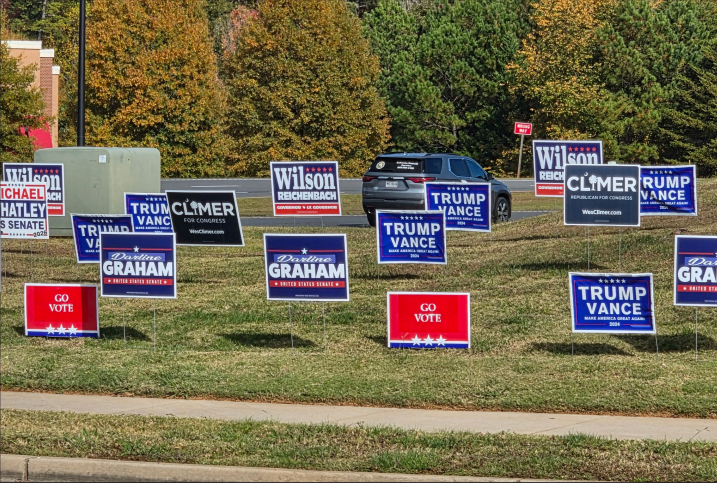
For South Carolina candidates, Dr. Annie Andrews has spent a significant amount in advertisements compared to Darline Graham.
Andrews has spent approximately $22.5 million as of Oct. 14, according to FEC records, with Graham only spending approximately $1.3 million.
Even with the difference in spending, Andrews and Graham were expected to have a tight race as of Oct. 28.
Not all states were predicted to have a close race. States such as Massachusetts and Rhode Island have their Democratic candidates winning over the Republican by over a 25% margin according to the University of Massachusetts and University of New Hampshire.
Democratic support has been strong this midterm season, especially in traditionally blue states like Massachusetts.
According to data found from a survey conducted on Oct. 8 by the Pew Research Center, the Democratic party has more engaged voters, which may lead to the current midterms favoring the Democratic party.
Looking at historic data, it is not uncommon for the President’s party to lose the House during midterm elections. A similar situation occurred with the Democratic party losing the midterm elections in 2022, when former President Joe Biden was in office.
For the senate, on average the sitting President’s party loses 3 seats per midterm according to historical data from The American Presidency Project.
Unlike the House midterm elections, the pattern is inconsistent, as former President Biden won a Senate seat in 2022 and President Donald Trump gained Senate seats during his first term in 2018.
Political scientists argue that voter dissatisfaction with the President and his party motivates opposition groups to mobilize, leading to a switch of party power in Congress during midterm elections.
Despite the Democratic party being favored overall, the Republican party holds a geographical advantage with their respective states.
The Republican party retaining an advantage within their states is due to the Democratic party being mostly located in high populated states and urban areas.
Since seats for the Senate are not based on population unlike those for the House of Representatives, smaller states have a disproportionate amount of representation.
Ultimately, it is the voter’s choice to decide if the historical trends of past midterm elections will continue or if this year will be an exception.