
Bailey Wimberly
Editor-in-Chief
Chase Duncan
Copy Editor
Editorial
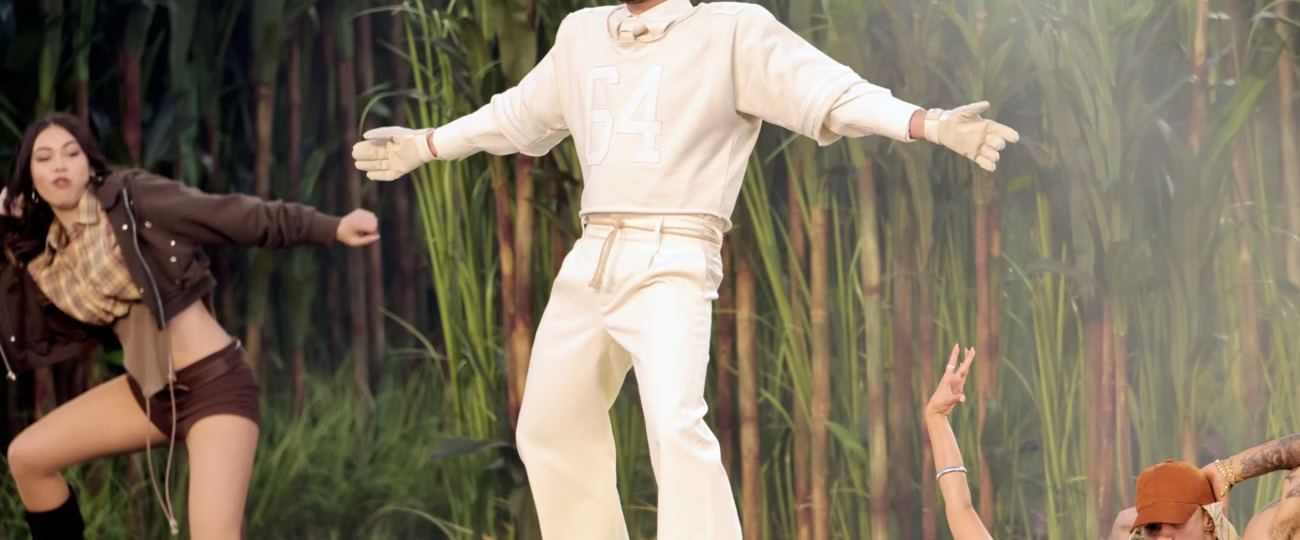
As a white American woman, I was one of many viewers who could not comprehend everything Bad Bunny was saying, but the story and visuals created a narrative that everyone could visualize.
While this halftime show was not in my main language, I understood the representation, culture, and meaning that Bad Bunny was able to represent for his home country, Puerto Rico, and Latin American culture.
The main two pieces I took from the performance were “the only thing more powerful than hate is love” and “together, we are America” not because they were the only words in English, but the symbolism and meaning behind the sayings.
Given the current state of the United States, the best way to unite our country is through rich heritage and representation across the nation.
After watching the halftime show with friends, I was inspired by the message and wanted to get to know more about this culture I knew nothing about.
In the past week, my staff spoke with members of Latines Unidos about the Super Bowl Halftime show and how it influenced them personally.
Marcus Gonzalez, a mass communication major, shared how he thought Bad Bunny did an excellent job at representing Latin American culture, even for people who are not specifically Puerto Rican.
“He brought up what life is like, not just as a Puerto Rican, but just as a Latino,” Gonzalez said.
Gonzalez shares how important Bad Bunny’s success has been to him and many others, “ I think the part that stood out to me was the little boy watching his Grammy acceptance speech. That night he won the Grammy, we were crying with him, myself included.”
When asked about the overall message of the performance, Gonzalez expressed the importance of representing the country, “[He’s] empowering every country there is…”
Sharing opinions with Gonzalez, business administration major, Kimberly Jaramillo, recognized the importance of representation throughout the performance.
“It was a good representation of people living their ordinary lives, just working and having a strong community, especially in Puerto Rico,” Jaramillo said.
“In the beginning when he was in that house, that’s a regular, like a house that you’ll see in Puerto Rico. Or like the crops, they’re really well known for their crops. And especially the power lines; when he got up on the power lines, that’s also a representation of Puerto Rico struggles.”
While talking about the representation across the country, Jaramillo focused on love over hatred throughout the United States.
Jamarillo voiced, “Recently America has been so centered on hatred and giving people different groups, Instead of being like, Oh, you’re different. Let me accept you. I want to love your culture. I want to get to know you because of who you are.”
After watching the performance, sociology major, Daniela Diaz, commented on the emotional appeal of the performance. “It made me feel kind of emotional to see it on screen, given what’s going on right now, and it means a lot to me to see all of the countries in not just Latin America, but just America in general being represented.”
Diez continued, “I think it’s a very powerful message, especially with what is going on right now, because there’s so much hate going on, not overall in the world, but in the United States.”
All of these students, including myself, recognize Bunny’s vision and recognize the importance of his messages. Together, we are united and that we must lean on each other for this world to succeed. We must learn to love each other regardless of gender, background, situation, and so much more that does not define us as people.
In the end, Bad Bunny came to one concise conclusion; love is more powerful than hate. Now, it is left to us, the audience, to spread love and kindness instead of the hatred that fills this world.