
Vice President of Facilities Management, James Grigg, gives a look behind the curtain on future campus projects, including a new residence hall, the relocation of the Louise Pettus Archives and a reshaping of Tillman Hall.
By Evi Houston
News Editor
News
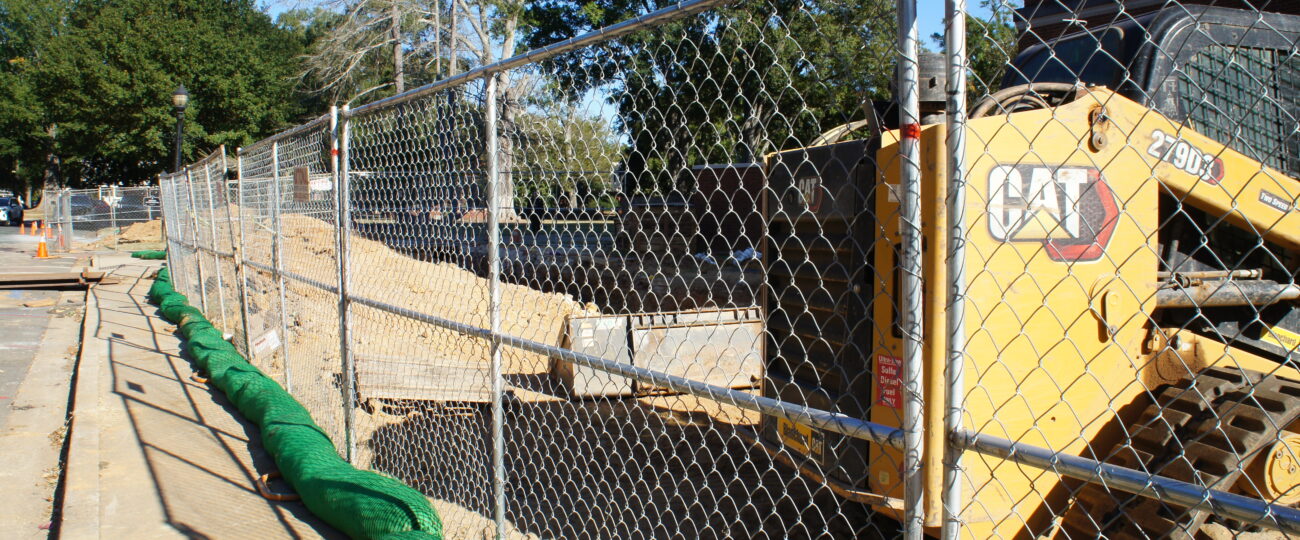
Despite the numerous construction projects currently happening on Winthrop University’s campus, there is always room for more in the eyes of Facilities Management Vice President James Grigg.
Grigg provided The Johnsonian insight on the many upcoming and expansive projects his department hopes to undertake in the next few years. These developments not only seek to address student and faculty needs, but reflect the growing nature of the university as a whole.
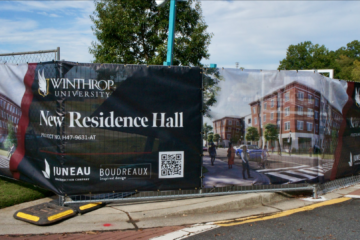
New Residence Hall
Perhaps most critical for the university at its current stage of growth and development is a shortage in student housing. “We are at capacity with residence halls, so we are actually in the study phase of a new residence hall,” Grigg said.
While this will be an extensive and lengthy project, Grigg was excited to share the details on the addition to Winthrop University.
The residence hall will be a four-story building with approximately 400 bed spaces. Costing between $48 and $50 million is a constraining factor for the project, as receiving funding and support from the state is required.
Grigg intends to open the hall in late 2027. This is a landmark project for the university, as traditional-style housing has not been developed on campus since the Wofford and Richardson Halls of the late 1960s, which were demolished last year.
“We know it’s a priority. It’s a priority for the board. It’s a priority for leadership. It’s a priority for growing Winthrop and growing the student body,” Grigg said about the new residence hall.
Grigg elaborated that the building would be a hybrid of hall-style and suite-style housing in what is known as “wet core.” “The bathrooms are in the hallway, but they’re individual bathrooms. So you’ll have an individual bathroom room on the hallway that will be a toilet, sink and shower,” Grigg said.
Wet core housing has the benefit of extra privacy for residents while also saving space. Grigg clarified that there will be enough bathrooms to meet building code and ADA compliance laws, with around one bathroom for every 5 residents.
The residence hall will also include lounge spaces, study spaces, a kitchen on each floor and a small meeting room for administrative and RA needs.
Additional information provided by a university press release on Nov. 3 announced that the residence hall would be 95,000 square feet, with construction beginning in 2026.
“Winthrop will go before the State for initial approval of the new residence hall in December,” the press release announced.
The hall would be placed exactly where the former Richardson and Wofford high-rise buildings were formerly located, off of Cherry Road. This space could accommodate two residence halls if necessary.
“Ideally, we would like to get to two new residence halls, knowing that we probably need an extra 800 to 1000 bed capacity,” Grigg said.
This would involve a two-stage building process, with 400 bed spaces in each hall. The buildings could potentially bookend each other, creating a courtyard facing away from the road that students could enjoy as a green and event space.
Alumni Drive Realignment
In conjunction with a new residence hall, Grigg discussed realigning Alumni Drive with Camden Avenue, right across from the future hall. This would eliminate the Alumni Drive-Cherry Road intersection, a highly dangerous spot for drivers due its the lack of traffic signals, low visibility, and proximity to railroad tracks.
Alumni Drive will instead swerve into the traffic light at Camden Avenue, located right next to the McDonald’s on Cherry Road.
There are complications with the realignment, as it will cut off some of the Dalton Hall parking lot. This project is expected to take multiple years and must be done in collaboration with the South Carolina Department of Transportation.
Ultimately, Grigg hopes to achieve a safer entrance and exit to the university, possibly involving a campus gateway design and our own traffic light.
New Cafeteria
When asked how the planning stages for a new cafeteria were progressing, Grigg explained that priorities had shifted to building student housing.
“We still need to address Thomson cafeteria. We’re working through some scenarios for that,” Grigg said.
Interfering with dining services is complicated, especially when considering the timing and cost for a project of this scale. For now, meeting housing needs is more important to the university.
Dacus Library and Dinkins Hall
As previously reported by The Johnsonian, the Dacus Library is slated for a renovation. This $6 million project is expected to include “behind the scenes” improvements on the building’s mechanical systems, Grigg explained.
The library’s neighboring building, Dinkins Hall, is also due for a renovation. This will cost $4 million and involve an update of the elevators and bathrooms in the building.
More significant is Grigg’s hope to relocate the Louise Pettus Archives, currently off campus on Cherry Road, to the Dinkins Hall basement. This will make use of the vacant areas in the Dinkins Hall basement and make the archives more accessible to the student body.
“We’ll actually do some other renovations in the basement that will make it a mixed-use space, mixed-use classroom space, that will benefit the building as a whole,” Grigg said. This project would work around the activities of the Winthrop Poll and other groups that meet in the basement and would take at least eight months to begin.
University Bookstore
The relocation of the Winthrop University archives is one of many moves in the planning stage.
Facilities plans to “Create a space for Career Services inside the bookstore,” Grigg said. Career Services is currently located in Bancroft Hall and will not move until early 2026.
This project would involve two entrances, with the Barnes and Noble entrance pushed further back into the building and a Career Services entrance on the side of Scholar’s Walk, as it will be taking up the two-story space on the side of the bookstore.
Demolitions
Both Roddey Hall and the Crawford Building are being considered for a future demolition, although a date has not been set.
“We know Roddy is a challenging building, and it doesn’t present the best to the student body,” Grigg said. Facilities is focused on developing a long-term plan for the building and what might take its place in the future.
The Crawford Building is in the same stage of consideration. Formerly home to Student Health, the building is currently vacant with no future plans for development.
Tillman Hall
One of the university’s oldest buildings, Tillman Hall, is slated for renovations. Grigg wants to “flip the script” on Tillman Hall, making it a more student-centered and lively building.
Ideally, all student services, including the Office of Financial Aid, Records and Registration and the Cashier’s Office would be together in Tillman Hall, instead of split across campus. Grigg calls this a “one-stop shop” for students.
“Everyone can help you together, and it makes [Tillman] a better student service environment,” Grigg said. This might include new services for students, such as an advising center where students can come to prepare for class registration.
Conclusion
Grigg emphasized that student and faculty feedback during these planning stages is critical. Being considerate of the needs of the Winthrop community and accommodating when possible plays a role in all that Facilities does.
“There is no idea that we won’t think about. Yes, some are easier to accomplish than others, but if students have an idea, please let Facilities know,” Grigg said.
Contact Facilities Managementl at facilitiesmanagement@winthrop.edu.