
Cultivating school spirit starting on the field.
Adriane Alston
Editorial Editor
Photo By Jackson Stanton
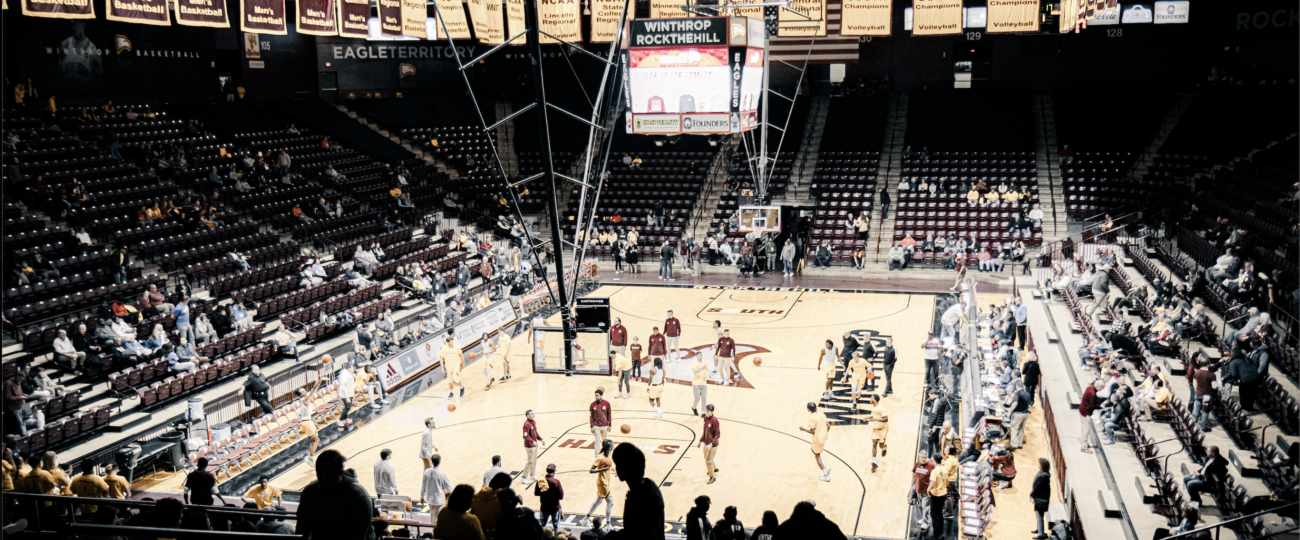
Winthrop men’s basketball attendance
Winthrop students don’t lack school spirit because they dislike the universal tradition that is sports. They lack it because they don’t take the time to know the athletes and feel the athletes don’t take time to know the students who are not athletes.
Every year our university offers free admission to athletic events ranging from lacrosse to track and field to softball, yet attendance still remains inconsistent even in spite of the price staying the same. On paper, that just doesn’t make sense. Free games, competitive teams that are actually good and an opportunity to support classmates should draw crowds in the masses. Instead, many students are still choosing not to go. This is not an access issue, this is an issue rooted in a lack of connection.
The fact of the matter is students don’t show up for people they don’t recognize or feel connected with.
At larger universities, athletic culture thrives because athletes create a culture where athletes are visible figures on campus. Students see them everywhere from the dining halls, follow them on the hottest social media platforms and when it’s time they recognize their names on game day. That familiarity builds a desire for investment. At Winthrop, many student-athletes blend into the general population of students. Without that recognition, games feel like randomized events rather than shared experiences that build memories of a lifetime.
When students personally know an athlete, their campus experience changes.
A student who might ignore a basketball game suddenly shows up because their friend is the point guard for the team.They cheer louder, stay longer and bring others along to experience the joy that comes from investing in others. The sport itself becomes secondary. The connection drives the experience. That shift proves something important, Winthrop doesn’t have a sports problem, it has a relationship problem.
And student-athletes have already started working to fix this issue.
This semester teams across campus have hosted events designed to break down the walls and encourage a sense of togetherness between athletes and the traditional student. They are actively introducing themselves to the student body. One example is the recent “Pie an Athlete,” where students interacted with players in a fun, low-pressure setting. Events like this create opportunities for conversations, laughter and recognition of the individuals who matter to them the most. They turn athletes into classmates into friends instead of distant figures who seem unrelatable.
But effort from athletes alone won’t eradicate the issue. The student body has to meet them halfway in terms of reciprocating this energy. School spirit doesn’t just build itself. It grows when students choose to show up and not just physically but socially as well.
That means attending games, participating in sports related events and making an effort to invest in the connection. It also means shifting the mindset regarding sports. Games shouldn’t feel like obligations or an experience only for people with niche interests. They should feel like shared moments that work to redefine the college experience.
For many students, those moments already exist, but for them it just happens off the field. Students pack social events, meetings for their favorite clubs and weekend gatherings because they know the people involved. The same principle applies to Winthrop athletics. When familiarity increases, interest will follow. The challenge is transferring that energy into the stands.
I’ve seen firsthand how powerful that connection can be. As someone who was a “Saturday Night Lights” fan in high school, I didn’t just enjoy the game, I enjoyed the atmosphere that came with the games. The crowd, the friendships and the shared excitement made every moment memorable even if you didn’t see it in that moment. The sport brought people together and the people made the experience meaningful. That same energy can exist at Winthrop, but only if students help in creating it.
The question isn’t whether Winthrop can build a strong sports culture. It’s whether students want to build a strong sports culture or not. Ask yourself what will Winthrop be known for after we graduate? Will it be a campus where students continued to be disconnected, or one where they built a community that showed up for each other in all aspects of the student experience?
The answer depends on what students do now. Go to a game. Learn a lacrosse player’s name. Bring a friend. Don’t just leave after the first quarter, stay until the end. Support doesn’t require deep sports knowledge, it requires presence and intention. When students start showing up consistently, the atmosphere will change. Athletes will feel it, teams will feed off it and as a result the entire campus will benefit from it.
School pride doesn’t come from winning alone. It comes from cultivating a sense of belonging. Winthrop already has the teams, the talent and the opportunities. Now it needs the students. If the goal is to create a lasting college experience, then the solution is simple: show up for the people who represent the school.
Because in the end, students never remember the score. They remember who they stood beside in the crowd and who stood beside them on the field of sports and lives.