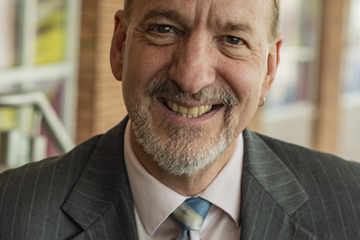

Dylan Bannister, a local artist and Winthrop alumni, warns what the loss of this creative hub will mean for artists.
Zachary Bell
Managing Editor
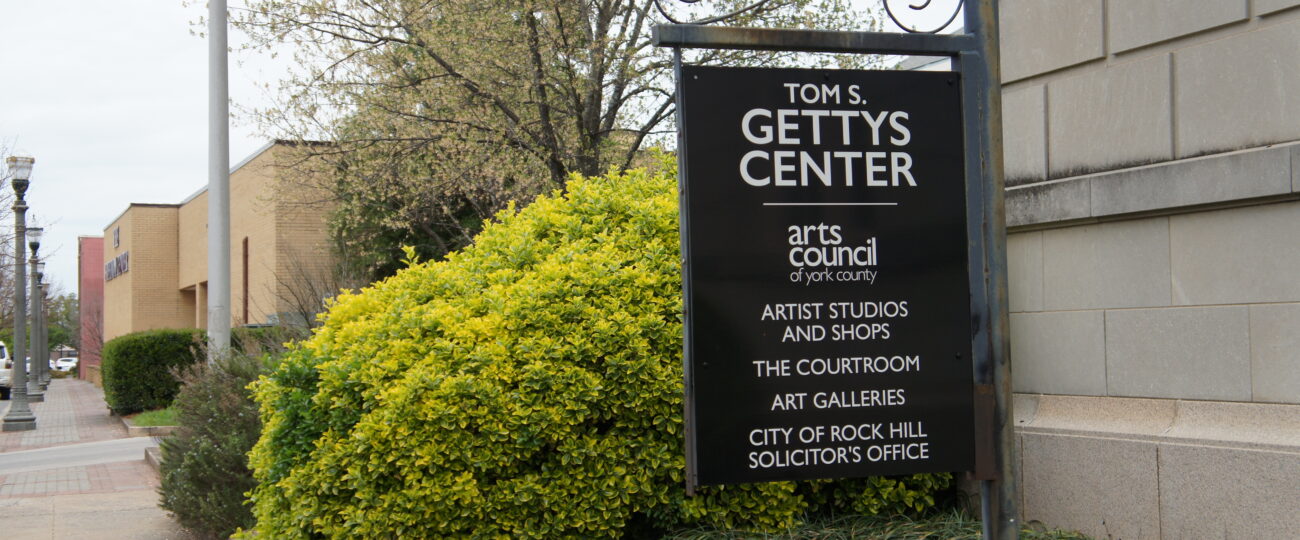
Rock Hill seems to be moving forward with the sale of the Tom S. Gettys Center. In a City Council meeting on March 9, a spokesperson for an anonymous bidder asked members of the council to review their offer for the downtown property.
This offer comes after a year of uncertainty for Rock Hill’s art community. The art community’s relationship with the Gettys Center goes back over 40 years when Rock Hill rented the property to the York County Arts Council. In turn, the Arts Council has leased offices to local artists.
Dylan Bannister, a Winthrop alumni whose studio is located in the Gettys Center, has been a powerful advocate for Rock Hill’s art community.
“The arts community is very aware of what’s going on here,” Bannister said. “What we really need is for the larger, broader Rock Hill population to understand the value of the arts and why they should be unhappy with this decision too.”
Bannister emphasized the Gettys Center’s role in developing a grassroot artistic scene. The Gettys Center provides an affordable space for artists and workshops. It also hosts galleries and features venue spaces for concerts, weddings and speaking events.
During weekdays, the Gettys Center is open to the public. This space provides a unique opportunity for the public to interact directly with local artists in their own workspaces.
Uncertainty surrounding the building has made it difficult for artists to plan for the future, both creatively and professionally. Bannister said many artists rely on the Gettys Center as an environment that includes tools and equipment that cannot be easily replaced.
Bannister discussed a hypothetical scenario where an artist is invited to exhibit at a studio.
“I don’t feel that I can honestly promise that, or that I can truthfully participate, because if I agree, and then I lose my studio, how am I going to produce the work?” Bannister said. “I can’t move the full operation home.”
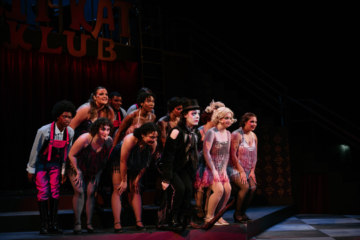
That uncertainty has not only impacted individual artists like Bannister. The Gettys Center has functioned as a gathering place for concerts, exhibitions and community events. From pottery classes to live music in the building’s former courtroom, the space has supported a wide range of creative activity.
However, planning those events has become more difficult in light of the looming sale.
“It’s very tough to plan for concerts, theater plays, symphony performances–any of that kind of stuff when you don’t know how long you’ll have the space,” Bannister said. However, this uncertainty has not stopped these artists from organizing. Winthrop’s own Mike Gentry, for example, continues to host concerts in the old courtroom.
According to Bannister, in the event that a sale is finalized, eviction would not be instantaneous. He described a potential 90-day inspection window following a second reading of the ordinance. During this time, the anonymous buyer would evaluate the building and would be allowed to alter or withdraw their offer.
Unlike a previous offer made in January, there are no known financial provisions being provided by the bidder to the artists.
Despite the uncertainty, artists continue to engage the community. Bannister and others are organizing an “artist yard sale” on April 11, which will open all three floors of the Gettys Center to the public. The event will feature artwork, supplies and open studios, and give visitors a chance to meet local artists.
The community’s response has been supportive. According to Bannister, some residents show up to events because it may be the last time they have the opportunity. Other times, Bannister says he will have conversations with people who walk into the Gettys Center and might not know about the situation.
“I am informing them of what the situation is, because it feels important to let the general public know,” Bannister said. “The arts community is very aware of what’s going on here. What we really need is for the larger, broader Rock Hill population to understand the value of the arts and why they should be unhappy with this decision too.”
Looking forward, the Arts Council of York County is exploring a new studio location in Leslie. While the shift to a new location might provide artists with a space to work in, it also emphasizes the loss of a downtown artistic hub.
According to Bannister, City officials have pointed to the Mural Mile Initiative and the Storyline Project as evidence of the City’s support for the arts. Although Bannister believes these efforts are valuable, he argues that they do not provide the same impact as an artistic center located downtown.
“There’s no question it is great for communities. It brings a lot of beauty into a space,” Bannister said. But the affordability and central location of the Gettys Center has enabled many artists to participate directly with the community. One such example is the Rock Hill Pottery Center which works with at-risk youth and people with developmental disabilities.
“Those are the things that are going to be lost from the sale of the building,” Bannister said. “I think when the City points to things that are pretty and digestible, like a Mural Mile, it feels like a true misunderstanding of what we’re actually asking for.”
For Bannister, the future of the Gettys Center is a reflection of a community’s creative identity.
“For the last 40 years, the city of Rock Hill has partnered with its grassroots arts community to make this building possible. And that community deserves to be a part of the conversation as well.”