
Considering education students amidst the transition to off-campus housing.
Adriane Alston
Editorial Editor
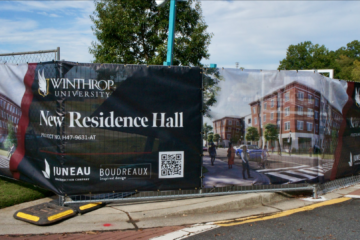
Students at Winthrop University are entering a period of transition, and with that transition comes excitement from some and uncertainty for others. The shift toward off-campus based housing gives students more independence and provides the opportunity to experience college from a different standpoint, but it also introduces new financial obligations and responsibilities that many are still learning to navigate, some people for the first time ever.
For a small number of students, this change feels like a natural next step. They are excited and looking forward to having their own space and managing life beyond the 4 walls of a residence hall. But for others, especially students in the Richard W. Riley College of Education, Sport and
Human Sciences, this transition raises important questions about balance, between academic commitments like internship and the cost of living.
At an Student Government Association Town Hall meeting a few weeks ago, students voiced these concerns directly. One question continued to remain persistent throughout the discussion: what will students in the College of Education do when their internships are unpaid, but they are now expected to afford rent? The consistency of that question stood out significantly among the other questions asked. Students were not asking it as a complaint, but as a way to better understand how they will manage their responsibilities moving forward while balancing the rigor that comes with their chosen degree path.
Education majors follow a path that looks different from many other programs. Alongside their coursework, they complete field placements, practicums and student teaching experiences that require time, focus and consistency. These internships play a critical role in preparing them to
become effective educators in the state of South Carolina and beyond. At the same time, they often limit the number of hours students can dedicate to part-time jobs outside of schoolwork.
As the off-campus housing experience becomes more common, students are beginning to think more practically about how these responsibilities will fit together. Rent, utilities, groceries and transportation will all become part of their daily reality. For education majors, the challenge is not a lack of motivation or lack of work ethic, it is allocating the time to meet academic
expectations while also maintaining financial stability that will become a crucial component of the student experience.
This concern does not take away from the value of off-campus living. Many students welcome the newfound independence and growth that comes with it. Instead, it highlights that all students experience and relation to this transition differ based on their major and intended degree program. Financial situations vary, academic demands vary, and the ability to adjust to these changes will not be the same for everyone.
The question raised at the Town Hall reflects a broader sense of awareness among students. They ask these questions not necessarily as critiques but as a way to think ahead. They are considering how their academic paths connect to real-world responsibilities, and they are trying to plan accordingly to accomplish every dream their hearts desire. That kind of reflection is exactly what higher education encourages.
At the same time, it creates an opportunity for conversation, particularly within the College of Education. As the university continues to implement changes in housing, it may be worth asking how these transitions will impact students whose programs require significant unpaid time commitments.
Again this is not about placing blame or criticizing the structure of education programs because it has been proven that Winthrop by far has one of the best education programs in the state. Research has shown the value of hands-on experience is clear, and internships remain an essential part of becoming an effective educator. Instead, this is about asking whether there is room to further explore how students can be supported through this transition to off campus housing while remaining committed to their academic obligations.
Can the Richard W. Riley College of Education, Sport and Human Sciences explore ways to better guide students as they balance unpaid internships and newfound financial responsibilities? Are there additional resources, conversations, or strategies that could help ease this shift for students? Even opening that dialogue could make a meaningful difference for students trying to plan their next steps while keeping their education at the center.
Winthrop has always emphasized student voice, and spaces like the SGA Town Hall show that students are willing to speak up and engage thoughtfully when they feel comfortable to speak. When concerns arise consistently, they offer insight, not just into challenges, but into opportunities for growth and support from our University.
Students in the College of Education remain committed to their path. They are preparing to enter a profession that demands an intense amount of patience, dedication, and care. As they take on that responsibility, it is reasonable to ask how the institution and their college in particular can continue to support them in return.
The question students raised still stands, not as criticism, but as consideration. And it is one worth exploring together.