

Dr. Muhhamet Asil, professor of political science at Winthrop University, provides analysis on major concerns surrounding the conflict between Iran, Israel and the United States.
Evi Houston
News Editor
News
The war in Iran has dominated headlines ever since it began on Feb. 28, in what the Trump administration terms “Operation Epic Fury.” Intentions behind the conflict remain unclear and include the assasination of Iranian leader Ali Khamenei, with hopes of ending his regime, concerns over nuclear and missile development within Iran and geopolitical pressures from Israeli prime minister Benjamin Netanyahu.
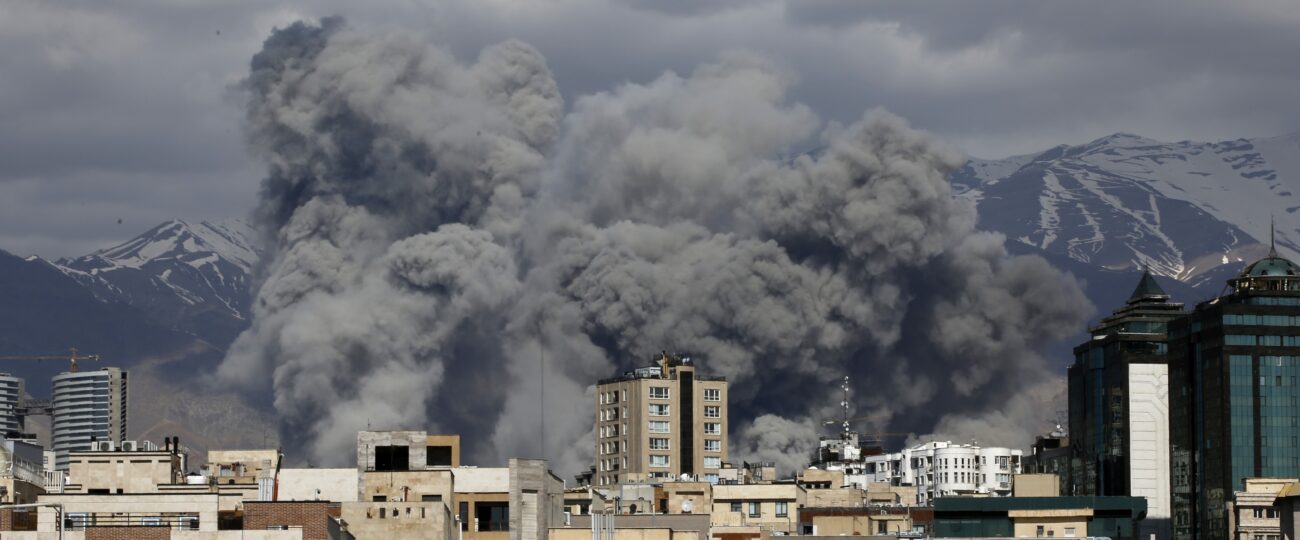
The United States and Israel continue to levy strikes and missile attacks on Iran and the surrounding region, which the country has responded to with their own military action. Death tolls in Iran have surpassed 1,000 and seven U.S. service members have been killed, according to the Associated Press on March 9.
Dr. Muhhamet Asil, a political science professor at Winthrop University, joined the department last semester. He specializes in international relations and political theory, and agreed to share his perspective as a scholar of Middle East politics.
When asked about what students might be missing when thinking about the war in Iran, Asil said that the war should be seen within the broader context of changing international relations. He argues that there is an international resurgence of competition based power-politics rather than cooperative rules-based systems, having a direct consequence on interactions with Iran.
“Over the past decade, key institutions and agreements that once structured relations with Iran [. . .] have been weakened or abandoned,” Asil said.
Asil notes the alliances and rivalries which make this war more complex, such as a history of poor relations between Iran and Israel and cooperation between Iran and Russia. Along with this are two opposing groups of countries which shape the conflict: the United States, Israel, and their Arab partners; and Iran with their regional partners, including Yemen and Syria.
President Trump’s unconventional leadership style is relevant to the conflict as well, which Asil termed a “madman” strategy. “The logic behind this approach is that if adversaries believe a leader might do almost anything, they may be more willing to make concessions,” Asil said.
There are downsides to this strategy, such as the risk of dangerous miscalculations on behalf of the United States.
Iranian nuclear developments are a critical motivator for the war. From the American perspective, “The key concern is the possibility that Iran could eventually cross the threshold and become a nuclear-weapon state,” Asil said.
Asil cited handlings of nuclear development in North Korea, where international agreements failed to prevent the country from obtaining a nuclear weapon. The United States and Israel may be taking a different approach with Iran, hoping that quick military action will prove more successful than lengthy negotiations.
Iran has already experienced political conflict with the United States and United Nations over nuclear development for many years. “Disputes over inspections, sanctions, and compliance have created deep mistrust on all sides,” Asil said.
Another source of mistrust which bears some resemblance to the current conflict is the 1953 Iranian coup d’état, in which the United Kingdom and the U.S. helped to overthrow leader Mohammad Mosaddegh. While this did not involve lengthy military action, it did result in regime change that favored the United States’ political and economic interests, including access to crude oil.
Many years down the line, resentment towards the United States and the installed regime culminated in the Iranian Revolution of 1979 and the Iran hostage crisis, in which 52 Americans in Iran were detained for 444 days, ending in 1981.
The hostage crisis created a major public spectacle and led to political consequences both domestically and internationally. U.S. involvement in regime change was a factor in the crisis, making diplomatic relations more contentious.
Asil agreed that Iranian memories of this coup could shape perceptions of potential regime change today. “Many Iranians viewed the coup as an example of external powers overturning a popular political process and installing an authoritarian system that remained in place for another quarter century,” he said. This led to continued hostilities following United States interference, a scenario at risk of repeating itself today.
Almost 75 years after the coup, outside involvement in Iranian leadership (through the assassination of Ayatollah Ali Khamenei) leads to more questions about the after effects of this approach on public opinion within Iran. Even if approval of the ayatollah was low, poor perceptions of the United States and Israel may sour the idea of “liberation” for Iranians.
“External intervention can easily trigger nationalist reactions and reinforce the legitimacy of hardline actors within the country,” Asil said.
Mojtaba Khamenei, son of the former leader, was announced as the new Iranian supreme leader on March 9. Khamenei will likely follow through with similar policies and approaches as his father, according to NPR.
President Trump expressed disappointment over the continuation of the Khamenei family reign, and has referenced that he would like to see different leadership and additional changes within the regime. It is unclear whether future military action would be taken to ensure this.
Questions regarding the timeline of the war have surfaced, with large U.S. military deployments reminding Americans of previous long-lasting wars in Iraq and Afghanistan.
“Iran has a long history of resilience in the face of external pressure … [so it] might not necessarily produce a quick political collapse,” Asil said.
Asil sees the scope of the conflict partially dependent on public opinion in the United States, as the war could escalate or remain limited based on the response domestically.
Success on Iran’s terms may be unconventional as well, as it can rely on “asymmetric tools” which put force on a stronger state without requiring as many resources. This includes shipping and oil costs and cyber operations.
Still, there is a possibility that President Trump’s unpredictable strategy could speed up the war, leading to “rapid escalation or sudden de-escalation,” Asil said. This rests on Iran’s assessment of the United States’ behavior, and the military strategies it is willing to attempt in response.
“The conflict with Iran is not just about nuclear policy or military strikes, but about deeper questions of regional power, historical mistrust, and how far great powers are willing to go when the rules of the international system begin to erode.”