

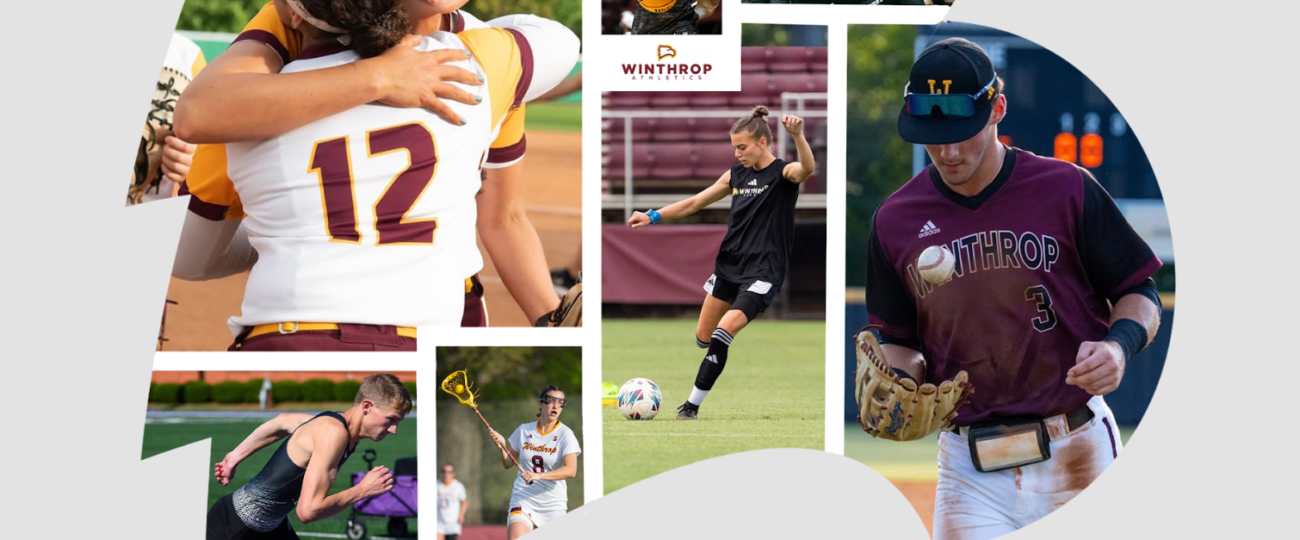
The passing of the act sets a national standard for NCAA rules and governance.
By Kellan Hudson
Sports Editor
Sports
This September, the U.S. Senate passed the Protect College Sports Act, a piece of bipartisan federal legislation that aims to create more uniform rules in college sports for Name, Image and Likeness (NIL) deals, eligibility and media rights, among other things.
The NCAA has struggled to govern college athletics since the 2025 House v. NCAA settlement overturned a lot of the rules that had previously been governing college sports. This has caused states and organizations to interpret the rules differently, leading to much disagreement in the world of college sports. The Protect College Sports Act seeks to reestablish these rules and eliminate confusion.
The first area the Protect College Sports Act covers is NIL, which are the rules that govern how athletes can be paid for the use of their name, image and likeness. It clearly states that athletes must report all NIL deals in which they make over $600. Athletes must report these deals to the College Sports Commission through the website NILGo.com within five days of completing the deal.
The Protect College Sports Act also places a cap on how much agents can profit from an athletes’ NIL earnings. For example, it enforces a 5% limit on sports agent fees in order to ensure sports agents cannot exploit athletes for their NIL earnings. This builds off the previous House v. NCAA Settlement that enforces schools to not directly pay athletes more than $21.58 million per year from the school’s own revenue, which began enforcement in the 2026-2027 academic year.
Alayna Friedt, a sophomore biology major on the golf team at Winthrop, shared how she believes there should be a limit to how much money athletes can make.
“Everyone is entitled to, not milk the system, but to get as much as they can out of it. That’s your right. But, some of the money people in these football programs are getting is ridiculous,” Friedt said.
The second component of the Protect College Sports Act is eligibility. The Act allows students one penalty free transfer (they will have to sit out a year if they transfer a second time) and five years of eligibility. The rule limiting athletes to only one penalty-free transfer will certainly change college sports, as in recent years it has become common to see athletes transfer many times throughout their career.
Friedt shared that she believes transferring many times throughout one’s athletic career can put a student’s academics at risk.
“I think there are really good reasons to transfer,” Friedt said. “Like you don’t like your coach, if you’re not liking the school, but let’s say you transfer two times in three years. That’s two different schools in three years.”
She noted that athletes changing schools this frequently can fall behind or fail to meet the new school’s graduation requirements.
“That’s causing you to stay in college longer and just milking the system,” Friedt said.
The Protect College Sports Act also discusses pooled media rights and prohibits schools from cutting non-revenue sports. The bill enforces an antitrust exemption for schools and conferences that create agreements to transfer their sports media rights to a third party.
It is important to note that the Protect College Sports Act does not label athletes as school employees. However, this question is one that has recently been heavily discussed. Athletes get paid either in scholarship or NIL to put in a certain amount of hours a week towards their sport, which is comparable to a job.
The purpose of labeling athletes as school employees would be to recognize the difference between athletes and the average student. If athletes were considered employees, they would be eligible for standard employee rights like minimum wage, overtime pay and the ability to unionize.
“I wouldn’t necessarily call us school employees,” Freidt said. “I would say there’s certain aspects of our life that are different from normal students, like the fact I have to take a PE (physical education) class right now after 20 hour weeks and lift is not my favorite thing to do, and I think we should be exempt from that.”
This raises the question: where is the line between treating athletes like normal students and giving them special privileges? Athletes get special privileges such as money, access to fancy facilities and the ability to pick classes before the rest of the student body, but are those privileges really what athletes need?
“I feel like people don’t understand how much work athletes actually put into these programs. They’re just like, ‘oh, they get money, they get scholarships to be here,’ but I think people don’t understand how hard it can really be to be a student athlete and to be in these programs,” Friedt said.
The Protect College Sports Act will not become law until it is passed by the House of Representatives, which is not expected to take up the legislation until after the November midterm elections. After this it must be signed by the President.